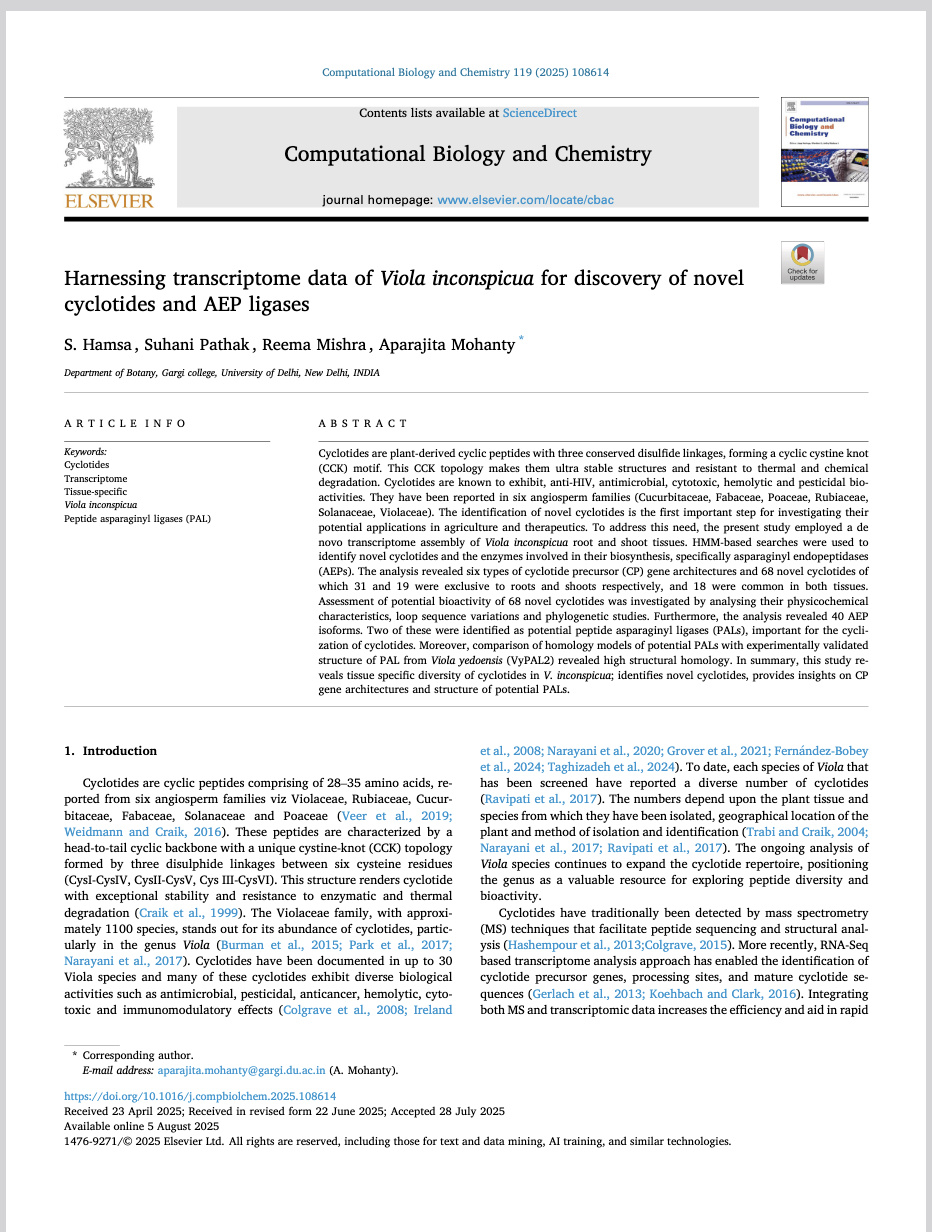

Title- Tranion Factors: Major Regulators of Anther Development in Rice. Naina Miglani, Preeti Aggarwal, Rajeev Ranjan, Aparajita Mohanty, Reema Mishra
<p>Abstract</p> <p>The process of anther development is complex and is vital for successful fertilization and consequently high crop yield. Anther development is regulated by a network of tranion factors that operate in a spatial and temporal way. Understanding of the molecular framework involved in this intricate process is critical from an economic point of view as anther-specific tranion factors have also been explored for their potential to generate hybrid crops via manipulation of male sterility systems in the rice crops. This review article discusses various tranion factors belonging to MYB, MADS-box, bHLH, PHD, and GARP protein families that have been shown to play a crucial role in rice anther development. These tranion factors can serve as a potential candidate to generate male sterile lines of rice for hybrid seed production. Thus, unraveling the interactive and regulatory network between these tranion factors during the different stages of anther development opens up new opportunities for scientists to decipher this multistage process. This insight has the potential to significantly contribute to advancements in the breeding and agricultural sectors.</p>
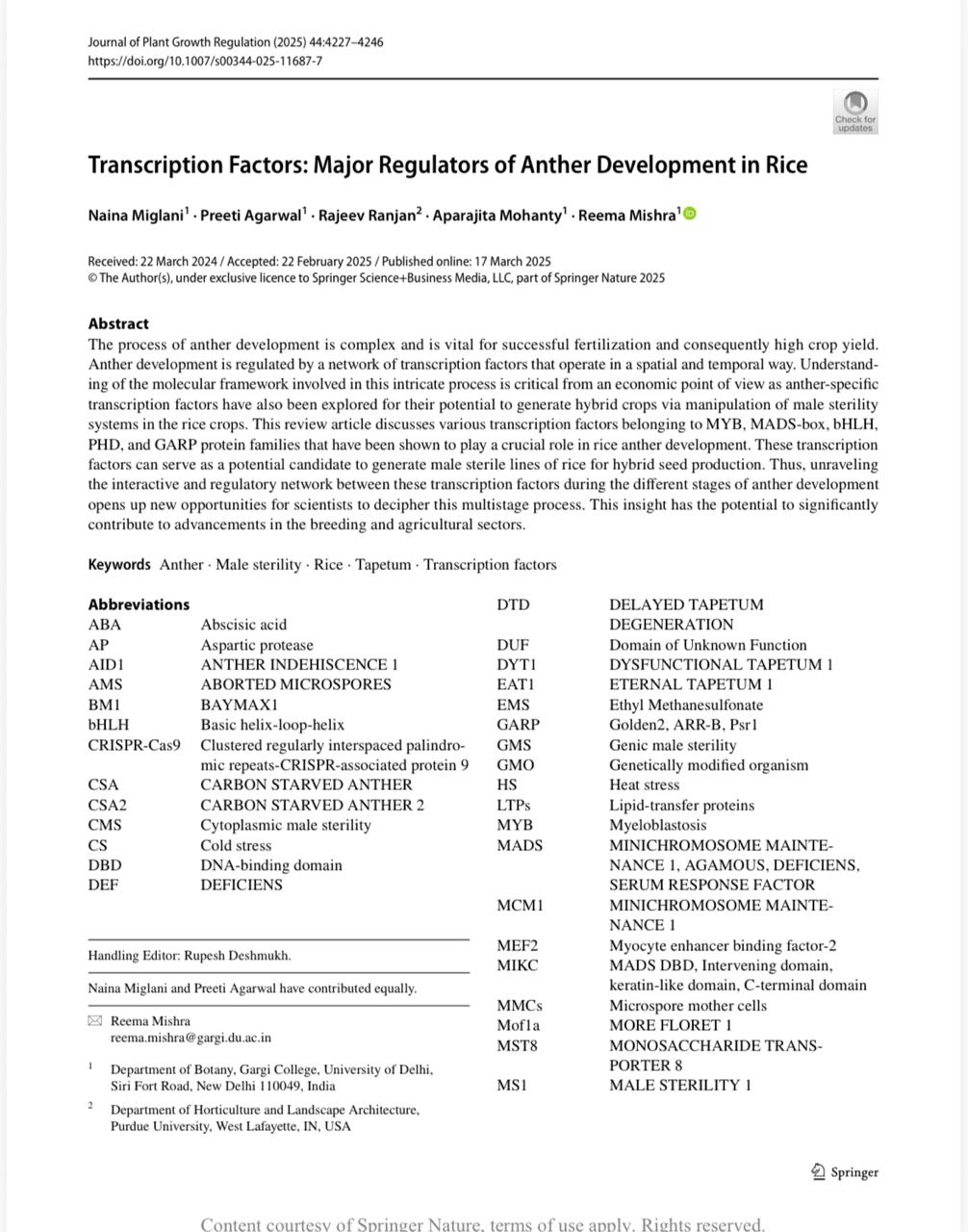
Title: Harnessing tranome data of Viola inconspicua for discovery of novel cyclotides and AEP ligases. S. Hamsa, Suhani Pathak, Reema Mishra, Aparajita Mohanty
<p>ABSTRACT<br /> Cyclotides are plant-derived cyclic peptides with three conserved disulfide linkages, forming a cyclic cystine knot (CCK) motif. This CCK topology makes them ultra stable structures and resistant to thermal and chemical degradation. Cyclotides are known to exhibit, anti-HIV, antimicrobial, cytotoxic, hemolytic and pesticidal bioactivities. They have been reported in six angiosperm families (Cucurbitaceae, Fabaceae, Poaceae, Rubiaceae, Solanaceae, Violaceae). The identification of novel cyclotides is the first important step for investigating their potential applications in agriculture and therapeutics. To address this need, the present study employed a de novo tranome assembly of Viola inconspicua root and shoot tissues. HMM-based searches were used to identify novel cyclotides and the enzymes involved in their biosynthesis, specifically asparaginyl endopeptidases (AEPs). The analysis revealed six types of cyclotide precursor (CP) gene architectures and 68 novel cyclotides of which 31 and 19 were exclusive to roots and shoots respectively, and 18 were common in both tissues. Assessment of potential bioactivity of 68 novel cyclotides was investigated by analysing their physicochemical characteristics, loop sequence variations and phylogenetic studies. Furthermore, the analysis revealed 40 AEP isoforms. Two of these were identified as potential peptide asparaginyl ligases (PALs), important for the cyclization of cyclotides. Moreover, comparison of homology models of potential PALs with experimentally validated structure of PAL from Viola yedoensis (VyPAL2) revealed high structural homology. In summary, this study reveals tissue specific diversity of cyclotides in V. inconspicua; identifies novel cyclotides, provides insights on CP gene architectures and structure of potential PALs.</p>